Game balance is of the utmost importance to how a game feels , it’s usually associated with making a game “fair”, however it goes well beyond that, giving the player a sense of progression both in skill and character, giving them new challenges to solve and new ways to engage with the game constantly are all key aspects that balance plays a part in.
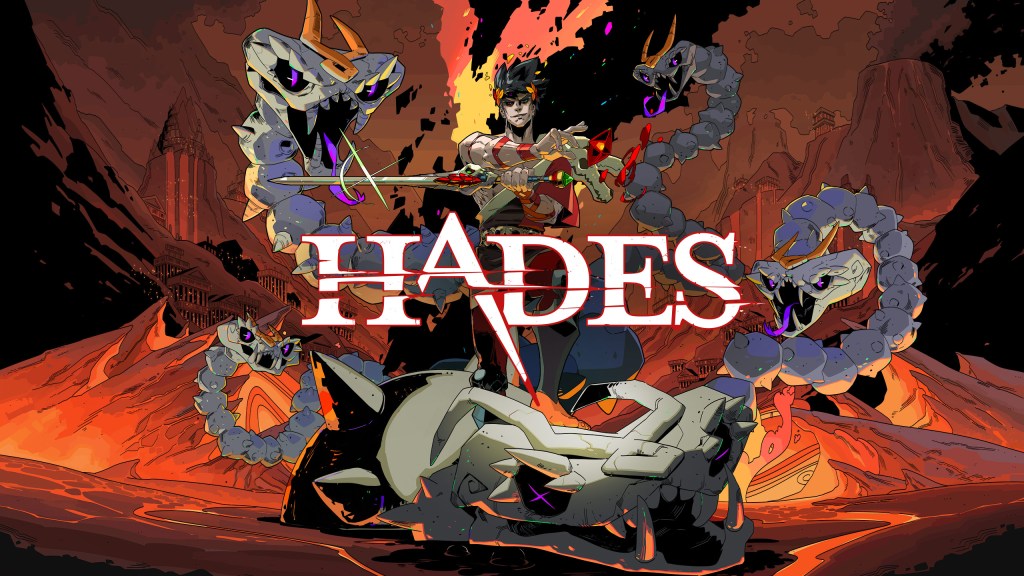
In this post I’d like to explore a little bit of Hades, a game that certainly won its fair share of awards and kept people engaged through very good story telling, gameplay mechanics, atmosphere, but more importantly the game balance execution.
Usually the first few hours of a game (First-Time user experience) are really important to grab the attention of a player, so with that in mind I wanted to understand what Hades did to keep players hooked in that initial time frame.
In order to understand it I played and recorded my first 3 hours of play, which provided me with data to analyze.
Time & Reward Schedule:
The first interesting aspect to look at is how much time you spend on Tartarus (Initial biome), on average the runs were between 6-8 minutes, this is including fighting the final boss (Meg).
This short time allows for fast repetitions of playthroughs which means that a loss feels less impactful than otherwise would.
Given that every time you die you get new story snippets in the House of Hades, that means that the player is presented with narrative beats around the same frequency.
Another interesting aspect is the general time spent per room encounter, on average the completion time of a room was around 30 seconds, this is an important measurement, it indicates fast and twitchy fights. It also means that every 30 seconds you’re presented with a different set of enemies (challenge) and choices (boons and other types of rewards).
In fact in general you’re making a boon decision (boons are the significant power spikes in Hades) every 40 seconds, this frequency means that you could be adapting your playstyle or decision making at a rapid pace in each run.
Interestingly enough when you start out on your first few runs the game guarantees a new God at the start of each, this means that if you lose you’re presented with a new narrative beat, gameplay mechanics, and not only that but each new run initially introduced around 2 new gods.
However this is not the only discovery the game offers to new players, there’s a meta progression between runs and that’s also important to take a look at. Hades offers two types of resources that can be used for this permanent progression, one of them are Darkness Crystals which are used to unlock permanent upgrades in the Mirror of Night, and the other is Chtonic keys which are used to unlock new weapons (and upgrading them but we won’t get too much into that).
On average you collect around 20 Darkness Crystals and 2 Chthonic Keys per run.
The names and costs of weapons are as follows:
| Eternal Spear | 1 |
| Shield Of Chaos | 3 |
| Heart-Seeking Bow | 4 |
| Twin Fists of Malphon | 8 |
| Adamant Rail | 8 |
Which gives us the following using the average of 2 keys per run, where the left column is the cost of the weapons yet again and the right column would be the number of runs needed to unlock up until that weapon and everything before it:
| 1 | 1 |
| 3 | 2 |
| 4 | 4 |
| 8 | 16 |
| 8 | 16 |
Which means in the first two hours of play you are able to change weapons at the following time intervals: 7/21/49 minutes for the first three weapons.
Weapons are usually a big difference maker in your overall strategy and change drastically the moment to moment gameplay, they offer a new way to explore the game.
This is important, it means that even in defeat the player can enjoy something new to try and a new narrative to follow. Each weapon offers significantly different gameplay patterns and new avenues of exploration for players that keeps the game fresh.

Next up are the Mirror of Night upgrades, they have varying costs, however since we’re evaluating the First-Time user experience we can focus on the first and second on the list which would be the most accessible ones.
The average per run came to around 20 Darkness Crystals (Currency used to unlock these upgrades), so we can quickly create the following table where on the right column indicates the run at which point you would be unlocking them:
| 10 | 1 |
| 15 | 2 |
| 20 | 3 |
| 25 | 4 |
| 30 | 5 |
This means that you’ll be unlocking a permanent upgrade initially once per reset. The next upgrade jumps up in overall cost to the following:
| 10 | 1 |
| 20 | 2 |
| 40 | 4 |
| 70 | 7 |
The amount of upgrades you unlock initially is overall coming at a pretty good pace, this allows the player to also slowly go further in their runs.
Overall Hades is able to keep things interesting by offering constant new ways in which the player can strategize, helping the player find their desired playstyle (through new weapons), permanent upgrades so that eventually even a player below the skill curve can succeed, story snippets, and finally new challenges for the player which always provides a new puzzle to solve.
Enemy Encounters:
So as described previously the player enters a new room around every 30 seconds, each room offers a different set of enemies and a subtle difficulty increase that is hard to gauge at first. I painstakingly wrote down every enemy in a room over all my runs to understand the difficulty curve.
Which looks something like this:

In order to understand the general difficulty of a room I grabbed the stats of each enemy and also attributed some multipliers ( if the enemy has an hard to dodge attack I gave a little bit more score and vice versa ), which gives the following table as an example:

I also multiplied the overall damage by 20 to give it more weight, this is because the player usually has around 80 total health, losing it means losing a run, that implies that the health of an enemy has less weight than their damage done to the player.
Overall the findings seemed to indicate around a 25% difficulty increase with each new room, with difficulty spikes on challenge rooms and boss fights, this is what it graphed out to!
(The red dots indicate challenge rooms and room 14 is the first act boss battle which I didn’t graph out with a value but you can assume it’s a difficulty spike as well).


Another avenue we can take when analyzing these encounters is to answer the question of how many of them can a player withstand given really good or really bad “luck”.
Since Hades is pretty much a game of skill, it’s not really luck we’re describing but rather the player skill curve. As you get better you’ll be able to manage your health better by dodging enemy attacks and/or block them more frequently.
So I did an overall pretty simple calculation where I take the main weapon of Hades (which you would be using in your first few playthroughs) and divided each enemy health by it, that gives you the hits to kill, I then multiplied that value by around 0,2 which would indicate an attack from them each 5 hits from us (this is a very rough estimate since I couldn’t find any actual numbers on their attack speed), and finally multiply that by the damage of the enemy.
Overall the above should somewhat benefit enemies with more health which is also the case in the game. Then to simulate player skill I multiply the whole result with another variable that I called “Player Skill” which would be equivalent to dodging the abilities.
This gives us the following graph for a value that a newer player could have:

This would indicate that around room 8 or 9 is when your first few runs would end (given that that’s when the sum of damage dealt to player goes above 80).
And the following graph is with about a 50% increase in player skill:

Which would indicate that the player starts pretty comfortably getting to Meg (the boss of the first biome).
This is an important attribute in rogue-lites where the player is expected to fail and try again, knowing more or less how much progress between runs based on unlockables and increase in skill is a valuable metric.
Encounter Variety:
Another important aspect in keeping things interesting for players is variety in numbers, the numbers are pretty simple:
- Your HP
- The enemy’s HP
- The number of enemies
- The amount of damage you do
- The amount of damage they do
It’s key to have a good variety in these numbers, if your weapon always did the same amount of damage and the enemy always had the same amount of HP then the shots to kill would be the same, so the player could approach each encounter the same way.
Uncertainty keeps players on their toes, keeps things interesting and gives a chance for highs and lows.
Hades does a good job by offering around 7 basic enemies all with distinct behaviors, HP pools and damage. Given that per room usually you see two types of enemies that means around 21 combinations of enemies, which keeps things fresh.
Not only that but enemies can have armor which increases the amount of possibilities even further.
It’s clear that Hades agrees and has something in place to ensure that there’s variety:

The numbers in the table indicate at which room they were first introduced in that particular run.
Overall this means that each enemy will be seen usually once per run, this is a decision that the designers over at Supergiant games had to make and its a crucial one. They most likely sketched out that the first biome would have a run time in the range of 7 to 10 minutes, then they had to decide how much time each encounter should take which seems like it landed on the 30 seconds range, if we divide the 7 by the 30 seconds combat duration we get 14 (which is actually the amount of rooms in the first biome).
Then the next decision was likely how many enemies would be needed to give a good variety to the player, since we have 7 types of enemies that are usually coupled in pairs that means 21 combinations which exceeds the number of rooms by around 50% and that’s without counting the armor mechanic.
That concludes the small analysis I did on Hades, to summarize here’s some of the points:
- Initially introduces new gods with each new run
- New weapons are unlocked in the following runs: 1/2/4/8
- New Mirror upgrades are initially unlocked after each run
- New story snippets are also shown after each run
- Encounters have an average duration of 30 seconds
- Players are doing boon choices on average around 40 seconds intervals
- There’s a steady 25% difficulty increase per room with some exceptions
 [miguel_marinheiro]
Leave a comment